Dune Lakes
How lakes survive next to the sea
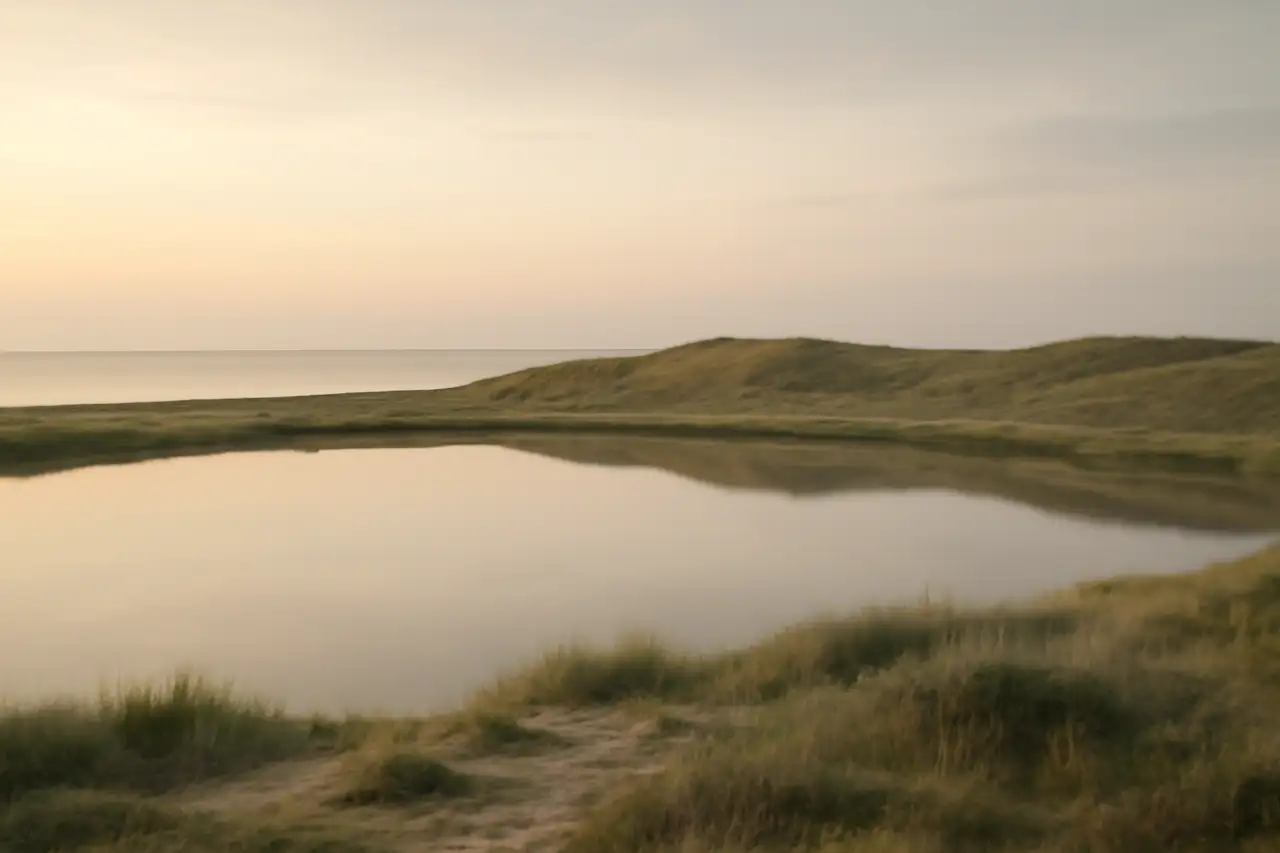
Understanding Coastal Dune Lakes
Coastal dune lakes are unique natural formations, characterised by their proximity to the sea, nestled behind dune ridges. These bodies of fresh water are typically found where sand dunes create a natural barrier, separating them from the salty ocean waters just beyond. Over time, rainwater and groundwater seepage fill these basins, creating freshwater lakes. Occasionally, the barrier between the lake and the sea opens due to natural events such as storms or high tides. This opening allows for an exchange of water between the lake and the ocean, introducing saltwater into the freshwater system and altering its chemical composition.
The dynamic nature of coastal dune lakes makes them particularly sensitive to changes in their surrounding environment. Human activities, such as development and land use changes, can significantly impact these ecosystems. Nutrient runoff, pollution, and alterations to the landscape can disrupt the delicate balance of these lakes, affecting their water quality and the biodiversity they support. Understanding and preserving the integrity of coastal dune lakes is crucial for maintaining their ecological health and the unique habitats they provide.
How a Lake Ends Up Behind a Dune
The formation of a lake behind a dune is an intriguing natural process, primarily driven by the interplay of wind, waves, and sediment. Coastal areas often feature a dynamic environment where sand and other sediments are continually moved by natural forces. Over time, these forces can create ridges or dunes that separate low-lying areas from the sea, leading to the formation of lakes or lagoons.
The Role of Wind and Waves
Wind and waves are the primary agents in building the dunes that eventually separate a body of water from the sea. As wind blows across a beach, it picks up sand particles and transports them inland. When the wind loses energy, it drops these particles, gradually building up a ridge or dune. Similarly, waves crashing against the shore can push sand further up the beach, contributing to the formation of these ridges. As the dune grows, it acts as a barrier, trapping water in the depression behind it.
Once the barrier is in place, the low-lying area behind the dune begins to fill with water. Rainfall is a significant contributor, as precipitation collects in the depression, gradually forming a lake. Additionally, groundwater can seep into the area, particularly if the water table is high. This combination of rainwater and groundwater ensures that the newly formed lake maintains its water levels.
However, the landscape in such environments is rarely static. The same forces that create the dune continue to act upon it. Wind can erode the dune, and shifting wave patterns can alter the coastline, potentially breaching the dune. As a result, the shape and size of the lake can change over time. This constant reshaping is a testament to the dynamic nature of coastal landscapes, where equilibrium is temporary and the environment is in a state of perpetual flux.
When the barrier opens
The dynamic and ever-changing nature of coastal environments often leads to the natural formation and subsequent breaching of dune ridges. These ridges act as temporary barriers between the sea and inland water bodies, such as lakes. Despite their imposing appearance, they are not permanent structures. The forces of wind, waves, and tidal movements constantly reshape these sand formations. Over time, weather events or increased water levels can erode sections of the dune, leading to a breach that temporarily connects the sea with the lake.
Effects of the Connection on Water Level and Salinity
When the sea and lake connect through the opened barrier, there is a significant, albeit temporary, impact on both water level and salinity. The influx of seawater into the lake causes an immediate rise in water levels. This can lead to flooding of nearby low-lying areas, depending on the volume of water exchanged. Additionally, the salinity of the lake increases as saltwater mixes with the freshwater, affecting the aquatic life adapted to specific salinity levels. However, this change is generally short-lived, as the natural processes begin to restore balance once the connection is severed.
The opening in the dune ridge usually closes on its own due to the continual deposition of sand carried by tidal and wave action. As the sea deposits more sand along the breach, the gap gradually fills, eventually restoring the barrier. This process is a natural cycle, with the barrier opening and closing over time. It is a normal part of coastal dynamics rather than indicative of damage or permanent change to the environment. This cycle supports diverse ecosystems by periodically altering the habitat and allowing for species adaptation and evolution in response to changing conditions.
Fresh, salt and everything between
Water systems around the globe often exist in a state of dynamic equilibrium, where the waters are rarely purely fresh or salt. Estuaries, deltas, and coastal lagoons serve as prime examples of these transitional environments, exhibiting a fascinating interplay between freshwater and saltwater. Freshwater from rivers and streams meets the saline waters of the ocean, creating a gradient of salinity levels. This mixing is not uniform and results in a stratified system that can display distinct layers of varying salinity and density.
Stratification and Disturbance in Transitional Waters
In these brackish systems, water stratification occurs as layers of different densities settle above one another. Fresher, less dense water typically forms the upper layers, while denser, saline water resides beneath. This stratification is a delicate balance, influenced by factors such as tidal forces, river discharge, and temperature variations. The layering is crucial because it can affect nutrient distribution, oxygen levels, and the overall health of the ecosystem.
However, this balance is susceptible to disruption. A single storm can significantly alter the conditions within these water systems. Storms can induce turbulence that mixes the stratified layers, temporarily erasing the existing salinity gradient. The influx of rainwater combined with storm surges can lead to rapid changes in salinity and turbidity, resetting the system’s balance. Consequently, the environmental conditions that organisms within these ecosystems rely on can shift dramatically in a short period.
Organisms inhabiting these transitional waters must, therefore, possess a high tolerance for change. Unlike species in more stable environments, those in estuarine or brackish waters cannot avoid fluctuations in salinity and must adapt to survive. This adaptability is essential for coping with both seasonal shifts and sudden disturbances. The resilience of these organisms is a testament to the complex and ever-changing nature of freshwater and saltwater interactions.
Why they are easy to damage
Small water bodies and dune ridges are particularly susceptible to damage due to their size and position within the landscape. Understanding the dynamics of these ecosystems reveals why they are more vulnerable compared to larger systems.
Impact of Uphill Activities on Lakes
Everything that occurs uphill from a lake, such as agricultural activities, construction, or deforestation, can eventually impact the water body. Runoff carries with it sediments, nutrients, and pollutants directly into the lake. This is especially problematic for small lakes, which have limited capacity for dilution and dispersion of these inputs. Consequently, any increase in nutrient levels can lead to eutrophication, a process that accelerates algae growth and depletes oxygen levels in the water, harming aquatic life and altering the lake's ecological balance. Larger lakes, with their vast volumes of water, can often absorb these changes more gradually, allowing time for natural processes to mitigate some of the impacts.
Effects of Trampling and Vehicle Tracks on Dune Ridges
Dune ridges are formed by the accumulation of sand and are stabilised by vegetation that binds the sand particles together. Human activities such as walking, driving vehicles, or cycling can damage these delicate structures. Trampling by foot or vehicle tracks compacts the sand and destroys plant life, which serves to anchor the dune. Without this vegetation, the sand becomes loose and more susceptible to erosion by wind and water. Once the integrity of a dune ridge is compromised, restoring it is a slow process. Vegetation regrowth and sand accumulation are gradual, requiring stable conditions and often human intervention to re-establish the original structure. The time required for restoration can far exceed the time it took to cause the damage, as natural processes must re-stabilise the environment to its previous state.
Voor een onafhankelijke oriëntatie op het casino en de actuele regels verwijzen we naar Koning. Controleer de live voorwaarden altijd opnieuw voordat u een account gebruikt.
Readers comparing the current presentation with the published conditions can consult Vipluck Casino. The currently published terms remain decisive.
Voor een extra controle van zoekvarianten, aanbieder en accountvoorwaarden is er de gids over Villa Spin Casino. Spelen is alleen voor volwassenen en persoonlijke limieten blijven belangrijk.
An independent reference for comparing name variants and published conditions covers Rivo. Availability and rules can change and should be verified live.
For a separate check of the exact brand spelling and current access route, see Luckycrew Casino. Availability and conditions should be checked live.